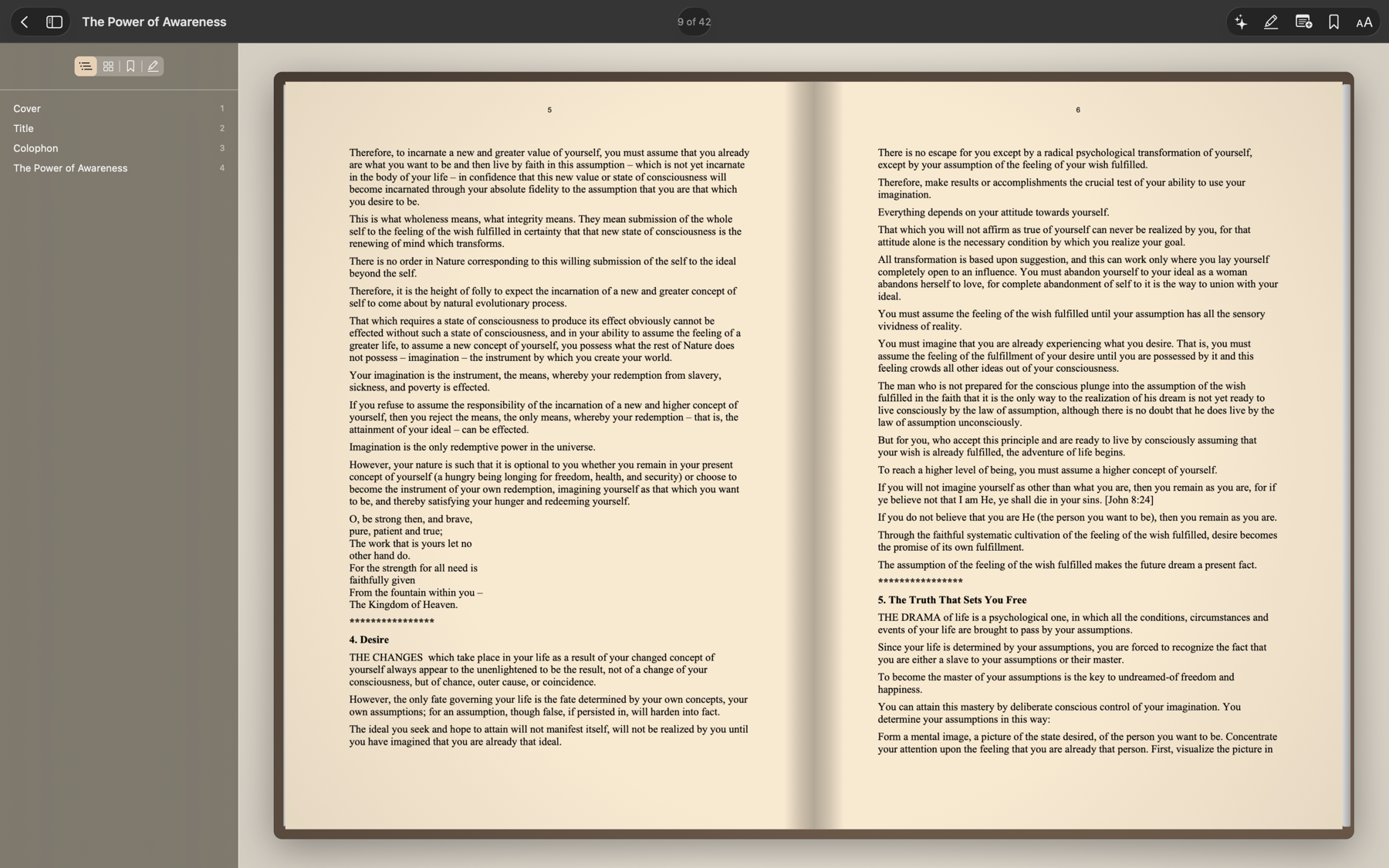
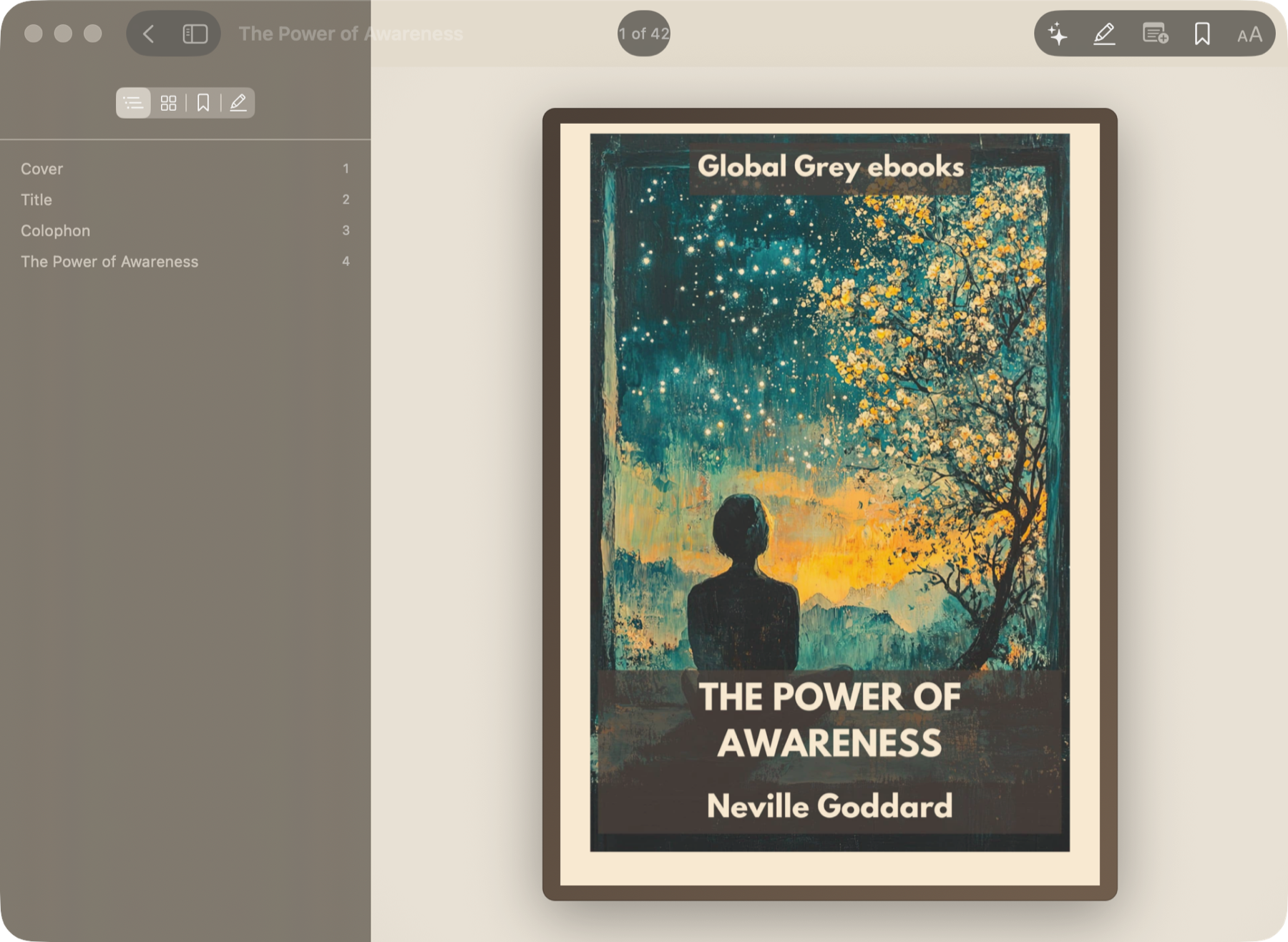
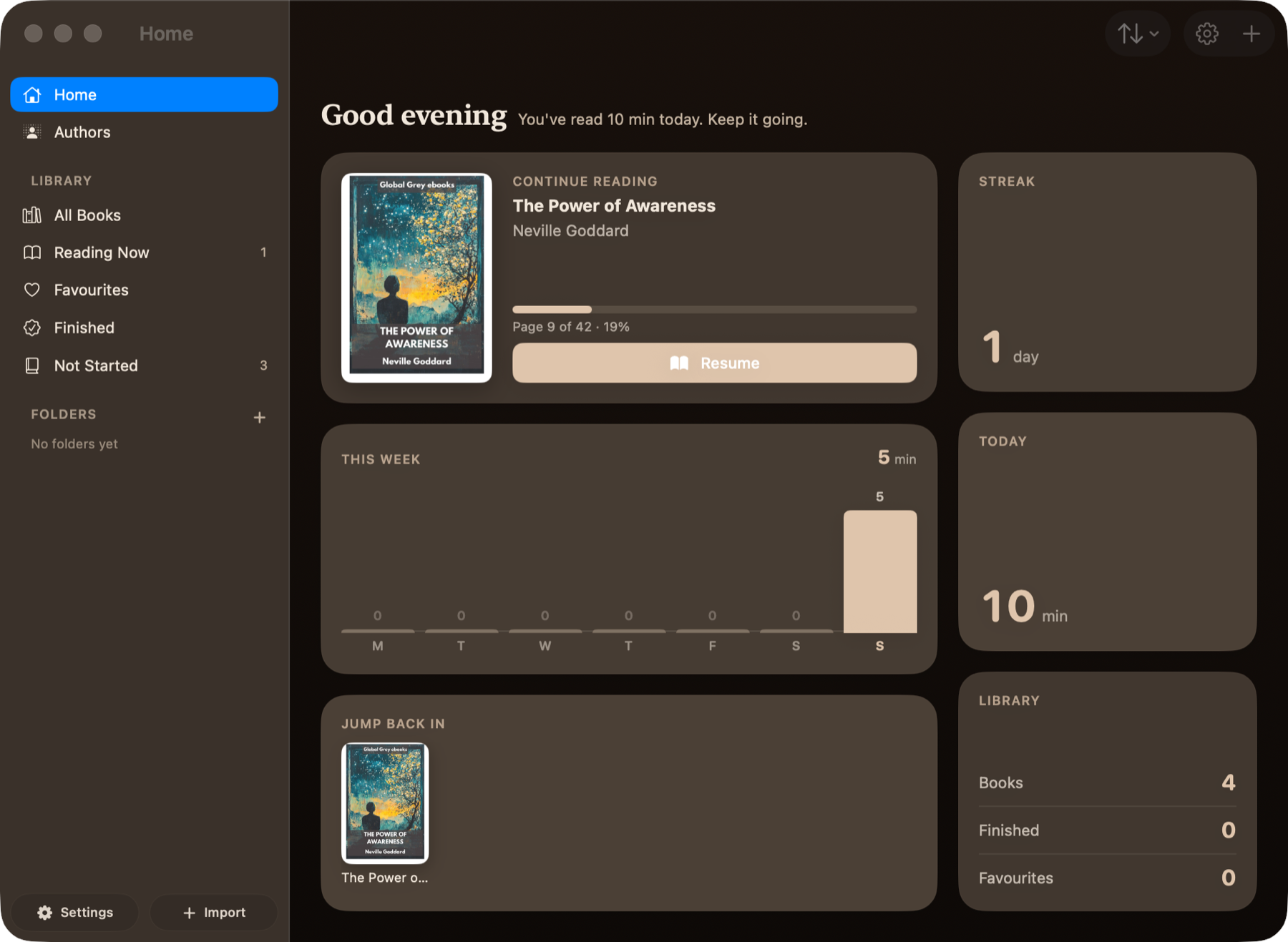
A macOS reader that treats a PDF like a book โ and lets you talk to the people who wrote them.
M1 through M4 and later. Runs natively on arm64 โ no Rosetta.
Native x86_64 slice for the Intel Macs that run macOS 26.
The turn is a Core Animation transform tracked 1:1 against the trackpad โ interruptible, reversible mid-gesture, and it carries your velocity into the release spring.
Book mode: cover board, centre spine, stacked page edges. Narrow windows fall back to one large page.


Warm Paper through True Black, with warmth and brightness trim. Applied to the rasterised page by a Core Image compositor, then cached.
A lightness-preserving invert that keeps photographs positive instead of colour-negating them. Night mode switches over between 8 PM and 7 AM.
Continuous vertical scroll with pinch zoom, or the text re-typeset in your own font and size.
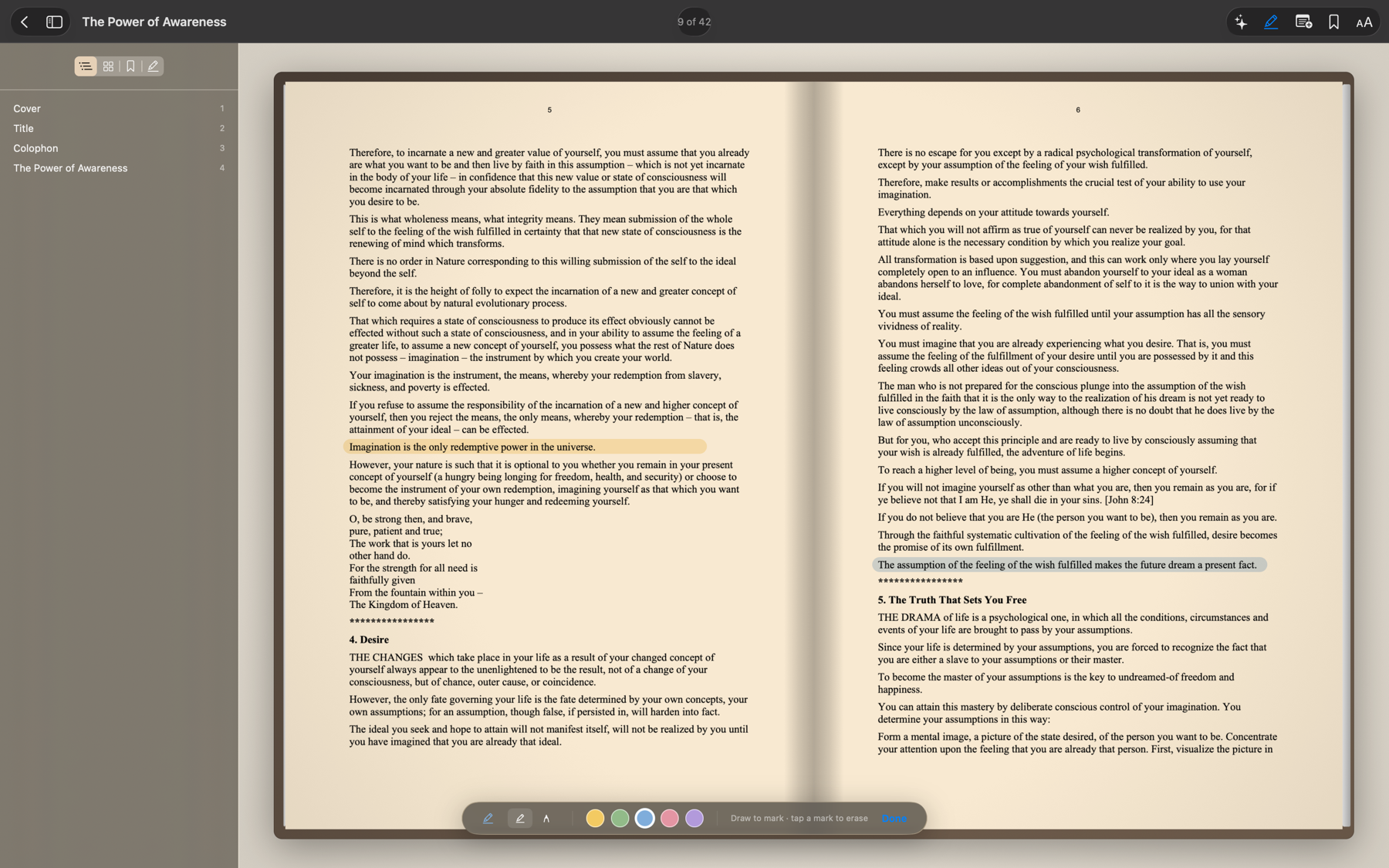
Freehand highlighter in five colours, sticky notes you can drag and collapse, and bookmarks with a ribbon on the page.
Uses the PDF outline, or synthesises one from printed contents pages and font-metric heading detection when there isn't one.
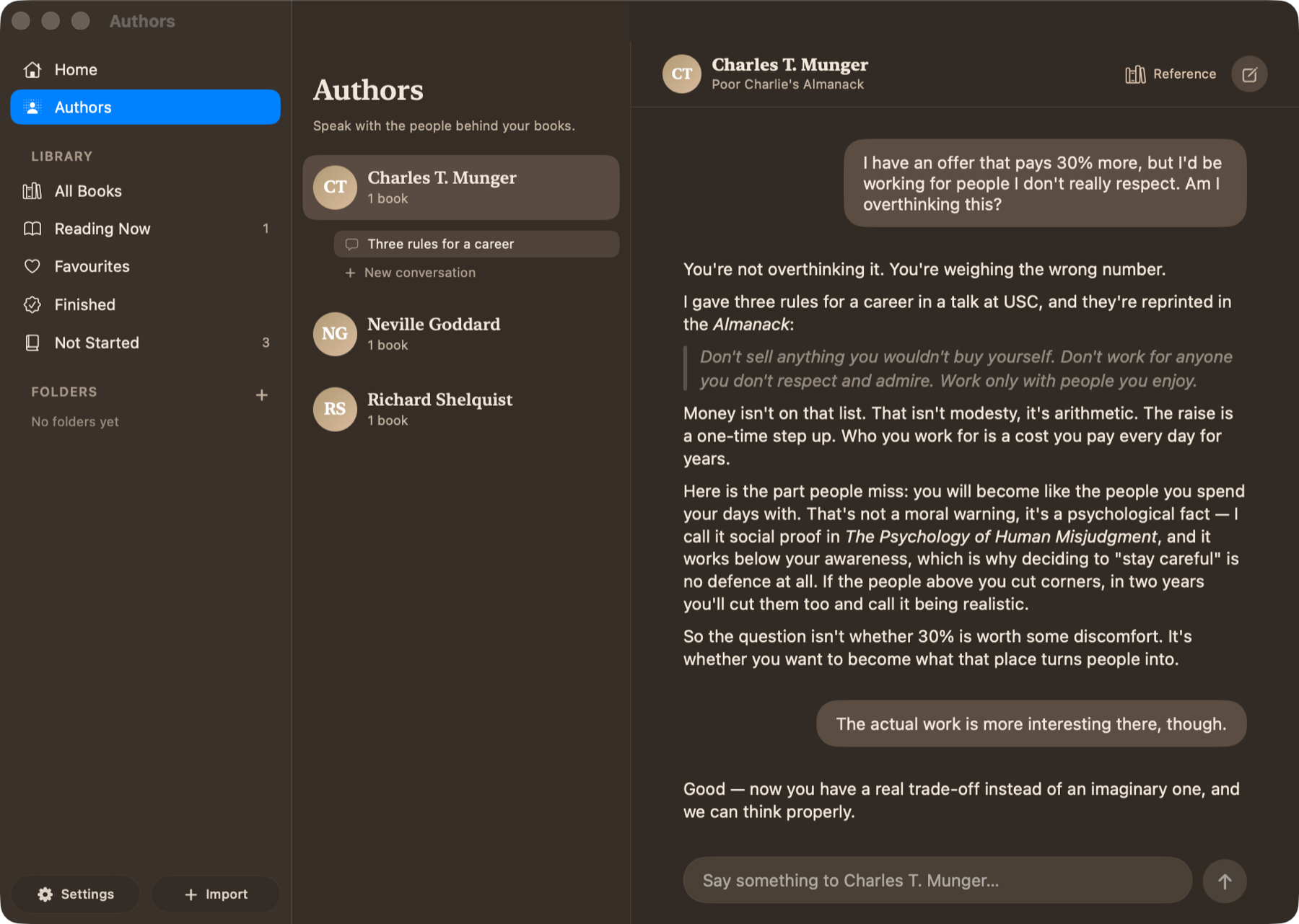
Ask about the page you're on, or question any author in your library. Anthropic, OpenAI, Gemini or YUNWU โ your key, your account.
Flipbook isn't signed with an Apple Developer ID yet, so macOS will stop the first launch. This is a one-time detour.
Unzip the download and drag Flipbook.app into your Applications folder.
Double-click it. macOS will refuse to open it โ that's expected. Dismiss the dialog.
Open System Settings โ Privacy & Security, scroll to the Security section, and click Open Anyway next to the message about Flipbook.
Confirm with Touch ID or your password. Every launch after this one is normal.
xattr -dr com.apple.quarantine /Applications/Flipbook.app
Free, MIT-licensed, and entirely local.